

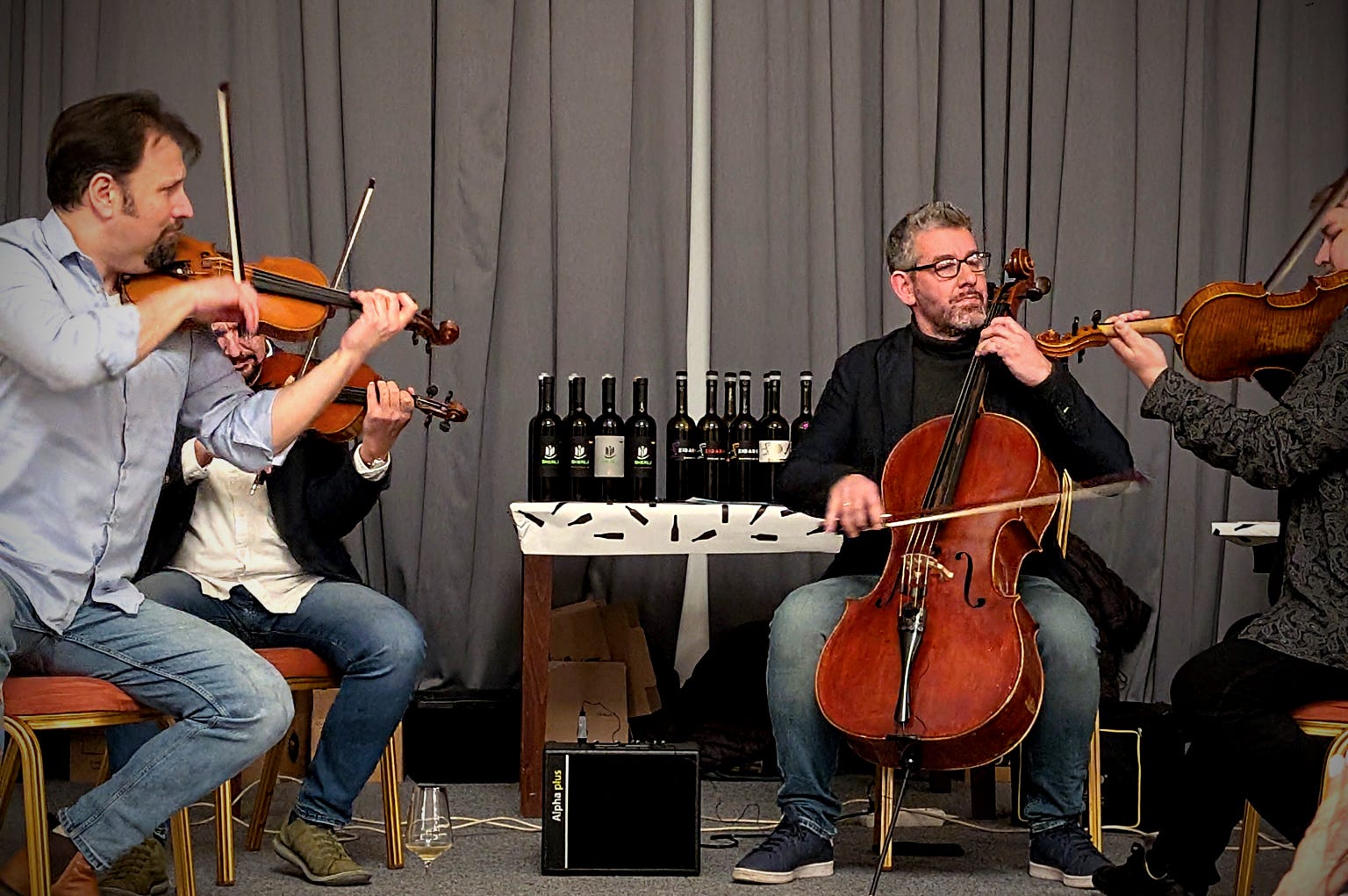
String quartets and formal speeches are hardly what you’d expect at a natural wine fair. But together they created a poignant moment at last weekend’s Bottled Alive, held in the Czech town of Tábor.
Organiser Jan Čulík took to the stage, a couple of hours into the Friday session. After a considerable effort to shush the enthusiastic crowd, he read these words from a crumpled sheet of paper:
Tábor is a town of 35,000 residents, yet this weekend it has welcomed 160 winemakers from 13 countries and 40 wine regions. For a mid-sized Czech town, these numbers are almost unreal. Why is that? The answer is community. Right after the family, it is the most vital and fundamental building block of society.
As we listen to this piece of music, I would like us to reflect on the power and the necessity of building similar communities beyond the world of wine in your own villages, towns, and regions. Wine is a magnificent tool for this. Let us use it not just for enjoyment, but as a way to deepen local relationships in the places where we live.
These social ties grow from shared hobbies, common interests and activities. They are our best medicine against a superficial world. They protect us from today’s fast pace. Let us use wine to create healthy, functioning local connections. Our greatest strength lies in these friendly ties which exist somewhere between the family and the municipality. Here, we have the power to shape our society.
Drink wine & build community!
The Epoque Quartet then ripped their way through Zrození, by Czech composer Jan Kučena. The title means ‘birth’ in English. Stylistically, I’d describe it as a mash-up of Bartók, Janáček and Philip Glass: folksy and energetic with a decidedly Slavic thrust.
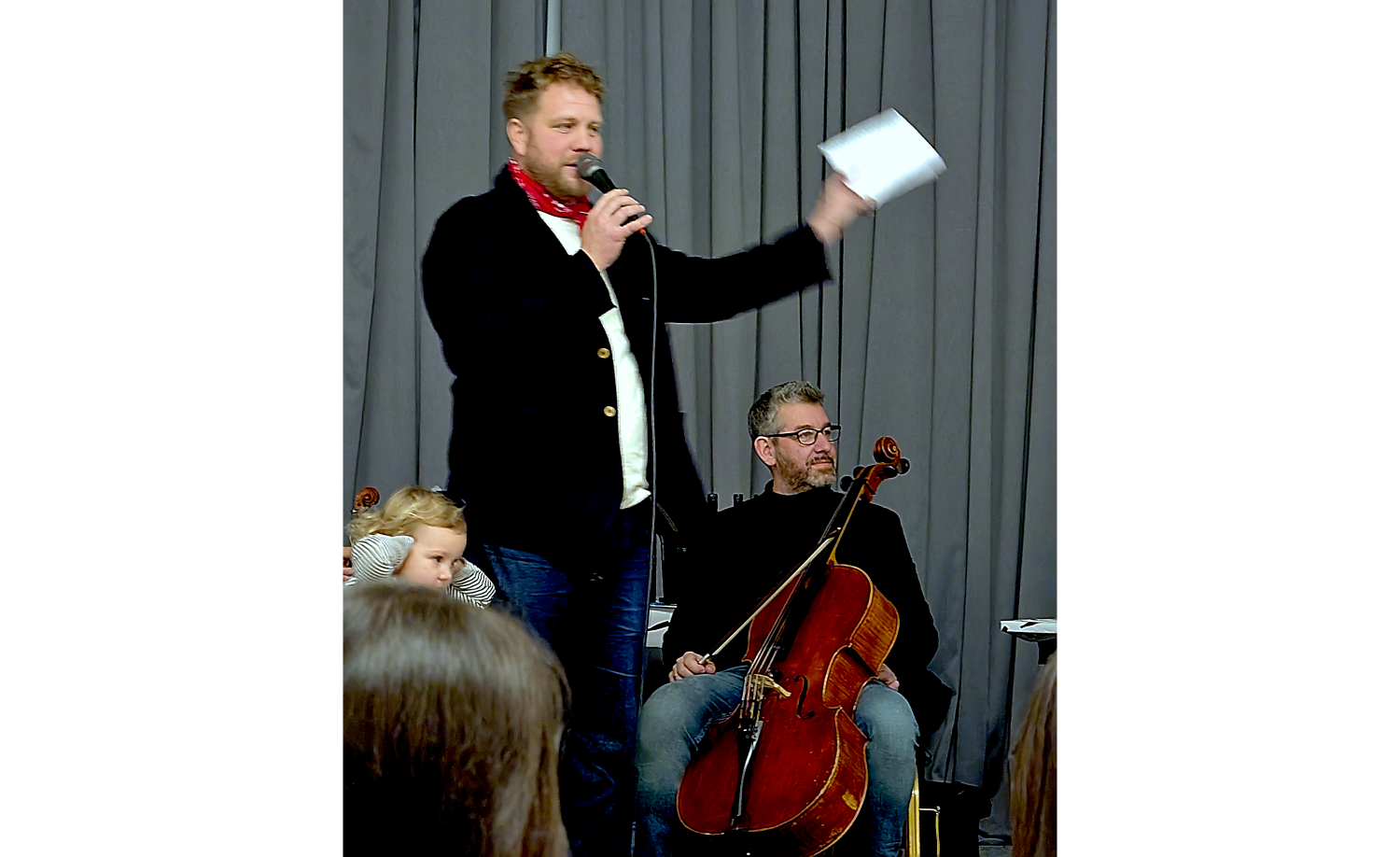
The music was spirited, but Jan’s words stayed with me for longer. I loved the concise, positive intent. He didn’t talk about the growing challenges faced by wine producers. There was no mention of the racial and political hatred driving an unprecedented number of wars and conflicts worldwide. Neither did he invoke the familiar battle-cry against the evil forces of ‘conventional wine’.
Nonetheless, these spectres circle around Jan’s entreaties like vultures. The wine world as we know it is under attack from every corner: the anti-alcohol lobby, climate change, tariff-loving megalomaniacs and societal change in general.
Just take a look the headlines racked up in the first few weeks of 2026: Constellation will shut down a massive winery in California “as a result of rapidly shrinking demand for commodity brands”, a major cave coopérative in Rousillon has just gone into administration and 63% of Gen-Z are afraid to get drunk in case they’re shamed on socials.
It’s tempting to view this carnage dispassionately, as if it doesn’t affect artisanal growers. But it does, and it is. I have had many worrying conversations with winemakers over the last year. Their mantra is as deafening as it is monotonous: sales are down, importers are not increasing portfolios, Asia is a write-off. The boom years are over.
All of this is why Jan’s missive matters now. Wine’s unique cultural place in our civilisation has become endangered, its potency weakened by transformation into a commodity - or even a supposed poison. Fairs like Bottled Alive remind us that a different reality exists.
Jan marvels at how these events bring people together. They are head-on encounters with an ad-hoc, international community: a wraggle-taggle band of obsessives, dreamers, idealists and hangers-on who gather together, united ostensibly by a love of fermented grape juice. In practice, what unites them is far more profound: the belief that wine and food embrace craft, poetry and culture. How could a commodity preserve those qualities?
I love Jan’s suggestion that wine could be the starting point for community. Getting together for a glass could build a new friendship or break down barriers. The standard 75cl wine bottle is itself a social device - it’s not designed for one person. I have nothing against innovation but this is the biggest argument against single-serve packaging. Sharing a bottle means sharing a conversation - and isn’t that how you build community?


Here’s a recording of Zrozeni, in an arrangement for string quartet and piano. I preferred the string quartet-only version played in Tábor, but couldn’t find it online.
It is that simple, isn’t it?
Jan is an amazing guy. Loved the energy! Can’t wait to be back.
''Sharing a bottle means sharing a conversation - and isn’t that how you build community?''
Bravo for this!!!