Mountains and Magliocco
Calabria might be known as the land of wine, but it depends where you go
Anyone can stumble into a Michelin-starred restaurant with a wine list the size of a James Joyce novel and point their finger at something half-way acceptable. Should instincts fail, trained personnel can guide and separate them from their cash.
But parachute that same person into a seaside town in the wrong part of Calabria and it becomes far more challenging. The wine list, if there is one, will be a terse proposition that muddles up producer, wine name and region. If you’re lucky, a grape variety might be specified. The only person with info is the restaurant owner. They’re not working today. The vintage will be a lucky dip.
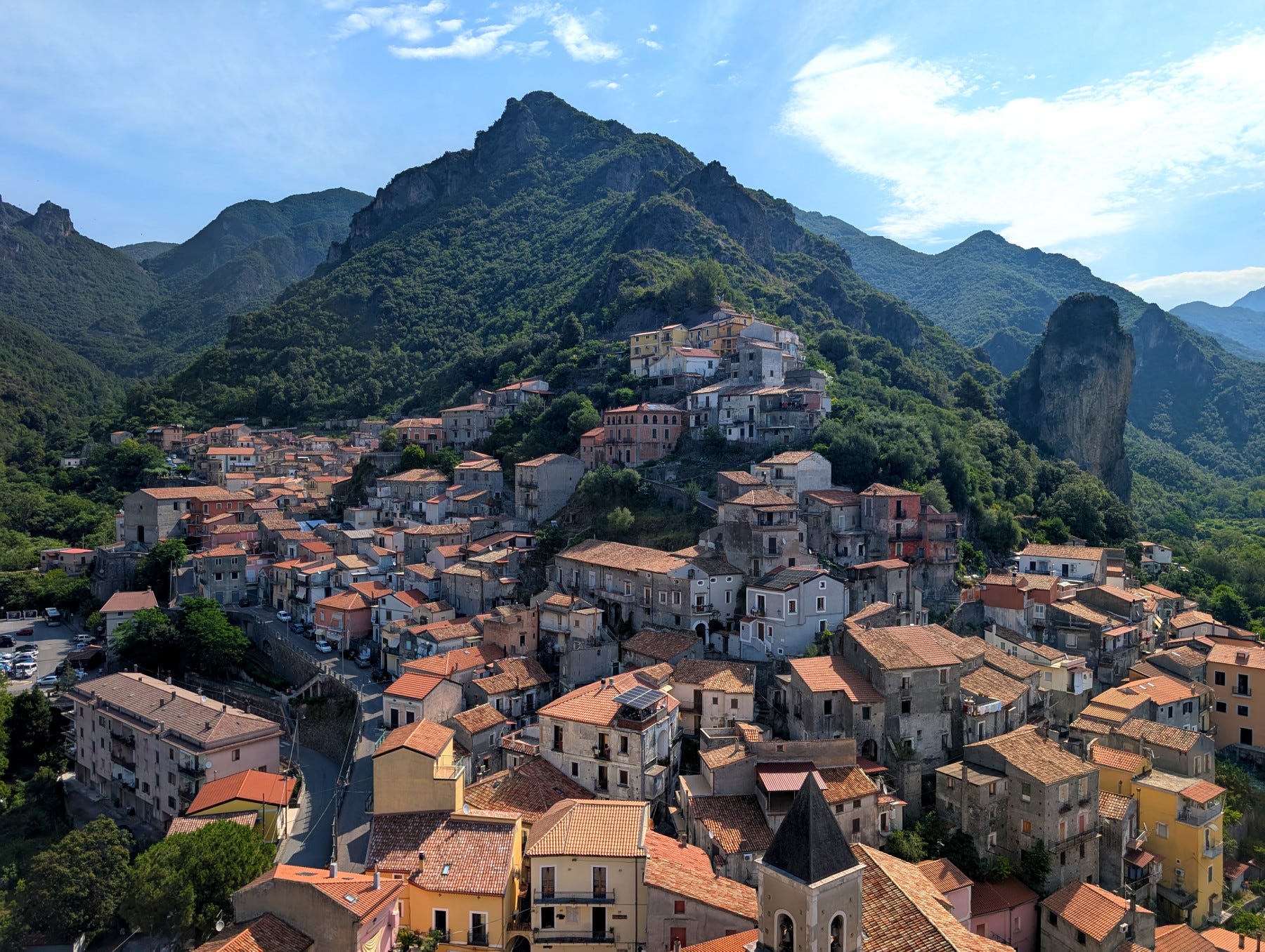
So what’s the wrong part of Calabria and what was I doing in it? Taking a short holiday as it happens. I’d always wanted to explore the mountains and national parks of this southern Italian region. I knew there ought to be good wine too.
A tale of two oceans
Vines have been grown in Calabria since way before the Romans arrived, but the region has remained in relative obscurity in modern times. It offers neither the volume of Puglia nor the prestige of Italy’s more northerly appellations. From nine scattered DOCs, only easterly Cirò has achieved any level of fame. I am a card-carrying fan of its red Gaglioppo - punchy tannins, tart cherry fruit and dried herb complexity tick all my boxes.
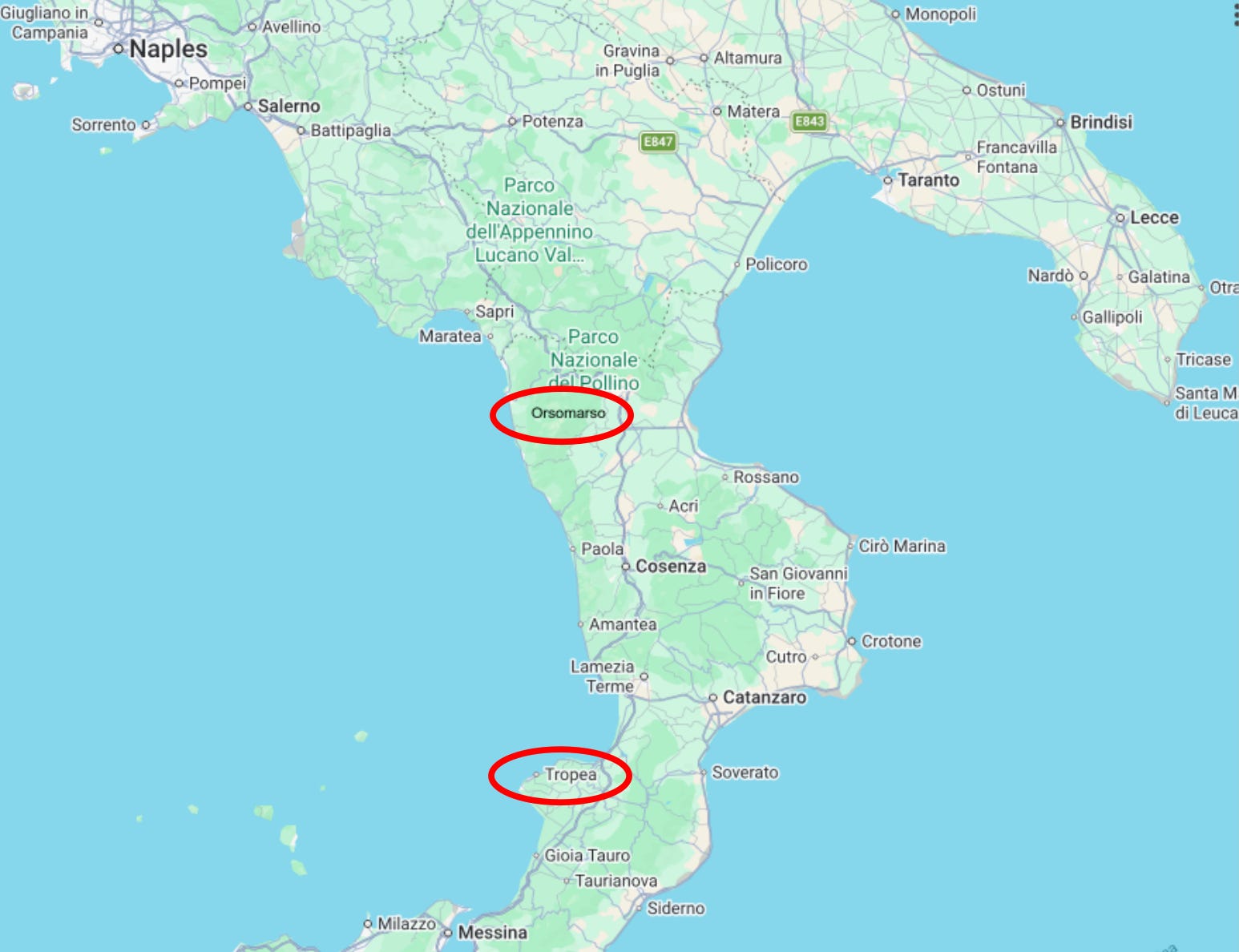
Much as I wanted to visit Cirò (near Crotone on the map above), the mountains of Pollino and the beaches on the Tyrrhenian Sea called louder. I couldn’t have picked two areas less known for wine. There was no shortage of the stuff to be had in the local restaurants, but it wasn’t quite what I had expected.
Up in the mountains, there was plenty of vino locale, as it inevitably appeared on the menu. It was almost always red, served chilled and cost between 7-8€ per litre. In Orsomarso’s one and only restaurant (La Costa), the waiter told us the house red was probably made from the local Magliocco variety - or maybe a blend with everything else in the vineyard. His dad would know - he made the wine. But the man was nowhere to be seen.
Either way, it was juicy, fruity and soft textured. It came fresh from the fridge in a carafe and we glugged it down enthusiastically. My appreciation of Magliocco might have remained on that level, but a visit to Casa Comerci moved the goalposts considerably.
Casa Comerci
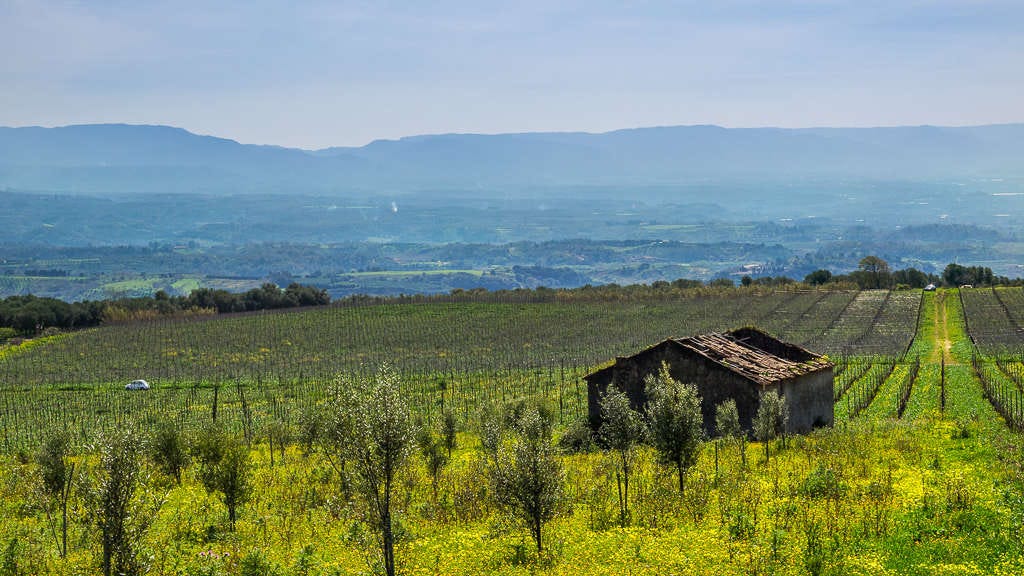
Sisters Rosa and Michela Comerci run this beautiful estate just a few minutes’ drive from the beach town Nicotera. Certified organic since 2009, it’s a high quality operation with 27 hectares of land, of which 15 are planted to vines. The family has just two varieties, Magliocco Canino and Greco Bianco.
Yes, it turns out that Magliocco comes in two variants. Most common is the more tannic Magliocco Dolce, also more plentiful on Calabria’s eastern seaboard - including Cirò. Not where I was, in other words.
Magliocco Canino, at least according to Walter Speller and JancisRobinson.com, might be related to Sangiovese. Its super power is retaining acidity, and it’s extremely late ripening - Rosa poured us a 2017 rosé that had been harvested in the first week of December. October harvests are normal even now.
Casa Comerci’s reds have a restrained character that you wouldn’t expect from such a hot, dry climate. There’s an added twist - the family has never used barrels, preferring to ferment and age solely in stainless steel tanks. It gives the wines amazing fruit focus and attractive plummy perfumes.


I first discovered Casa Comerci via their orange wine Jancu, at a tasting in Amsterdam a few years back. Jancu 2022 is Greco Bianco skin fermented for 70 days and bottled without added sulphites. It’s lean and briny, with fine tannins and a bone dry finish. Give it some air and ripe, dried apricots emerge on the nose.
All of the wine names are from the Calabrese dialect. Jancu means - amusingly - white.
Granàtu 2025 (“pomegranate”) deploys Magliocco for a rosé with incredible saline energy. Deeper coloured and more intense than your standard issue Provençal number, I found it seriously moreish. We enjoyed a bottle later that evening with grilled fish.
Top tip for dinner on Nicotera beach: spurn the more fancy looking Coco Bay Restaurant in favour of Lido Blue Inn. It looks like nothing but the cooking is excellent. Casa Comerci’s wines are available in both locations.
Libìci 2022 is a lighter expression of Magliocco Canino, produced from younger vineyards. The nose has a gorgeous fruity perfume, but I found the tannins a bit spiky and green. I couldn’t help wondering if a little barrel time would have helped.
‘A Batia 2021 is sourced from the family’s original two hectare plot of Magliocco, with vines up to 100 years old. The fruit is concentrated and ripe with a wild, plummy character and plush texture. I didn’t miss the oak influence here.
Two ancestrale sparklers, the white Fantasia 2023 and rosé Nonsense 2023 both come recommended - they’re crisp and refreshing, made without a gram of sugar or any sulphites.
Anything you like as long as it’s Cirò
It was heartening to spot Casa Comerci’s wines in a few restaurants along the coast and in Tropea - the area’s most famous beach town - but I saw precious little else from this part of the region. Cirò wines dominate wine lists everywhere, despite it being three hours’ drive and 200km north-east from the Tyrrhenian coast.
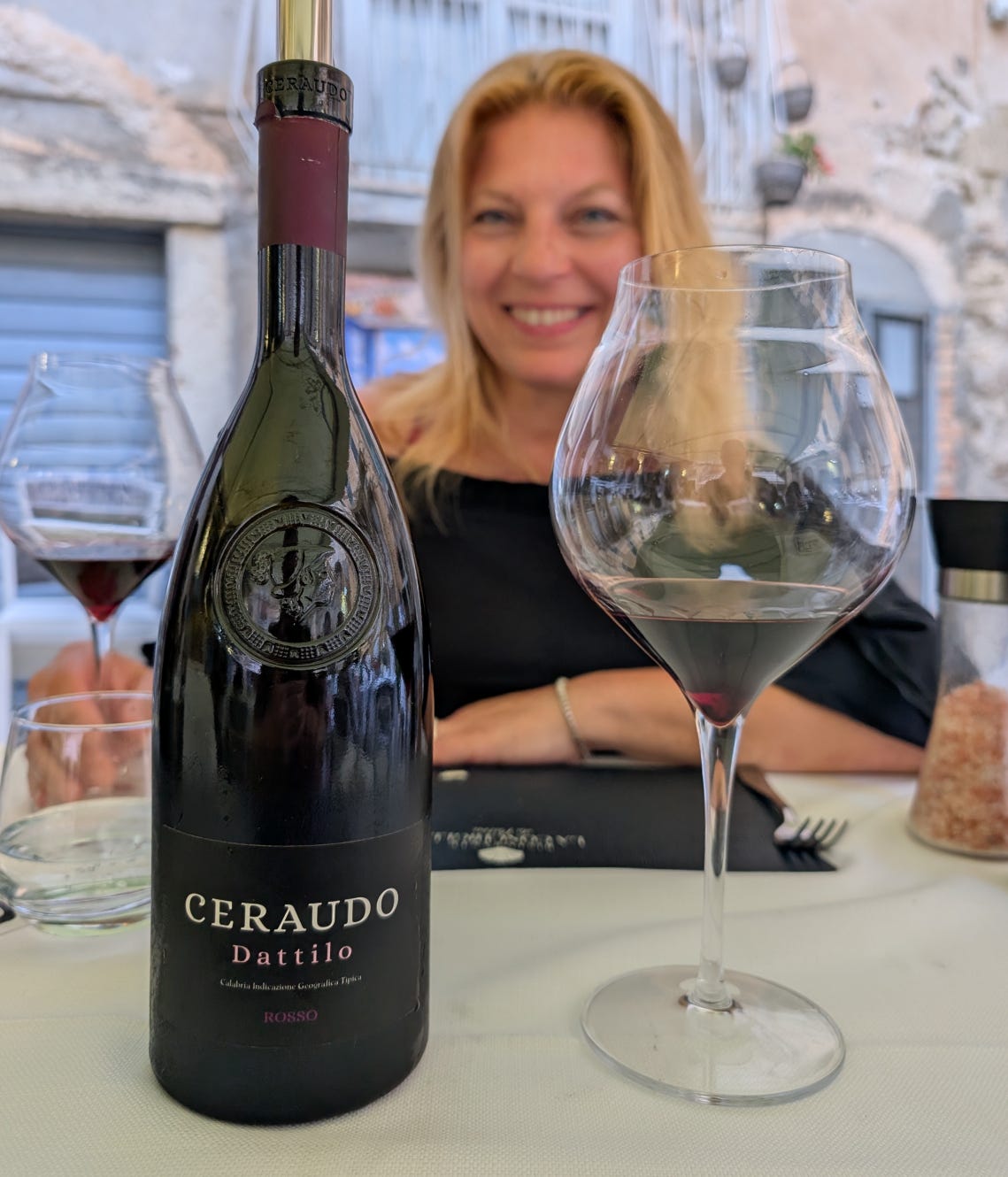
By the glass options all over Tropea were mostly from one Cirò winery, the massive Librandi. They seem to have the market sewn up. I lusted after a proper artisanal Gaglioppo, but it wasn’t easy to find. We scored on the final night of the holiday, dining at La Conchiglia da Patea, tucked away in a quiet courtyard in downtown Tropea (highly recommended cooking, needs a reservation at weekends).
Ceraudo’s Dattilo 2021 showed the pruney, roasted herb character that I love in well aged Gaglioppo. Like Magliocco, it’s a variety that always retains freshness. And that structure!
My go-tos for low intervention Cirò would be A’Vita or Calabretta, but Ceraudo pushed the right buttons - maybe a touch heavy on the oak, but enjoyable. The bottle was served at the ambient temperature of 30C. Luckily no-one hated on us for requesting an ice bucket.