

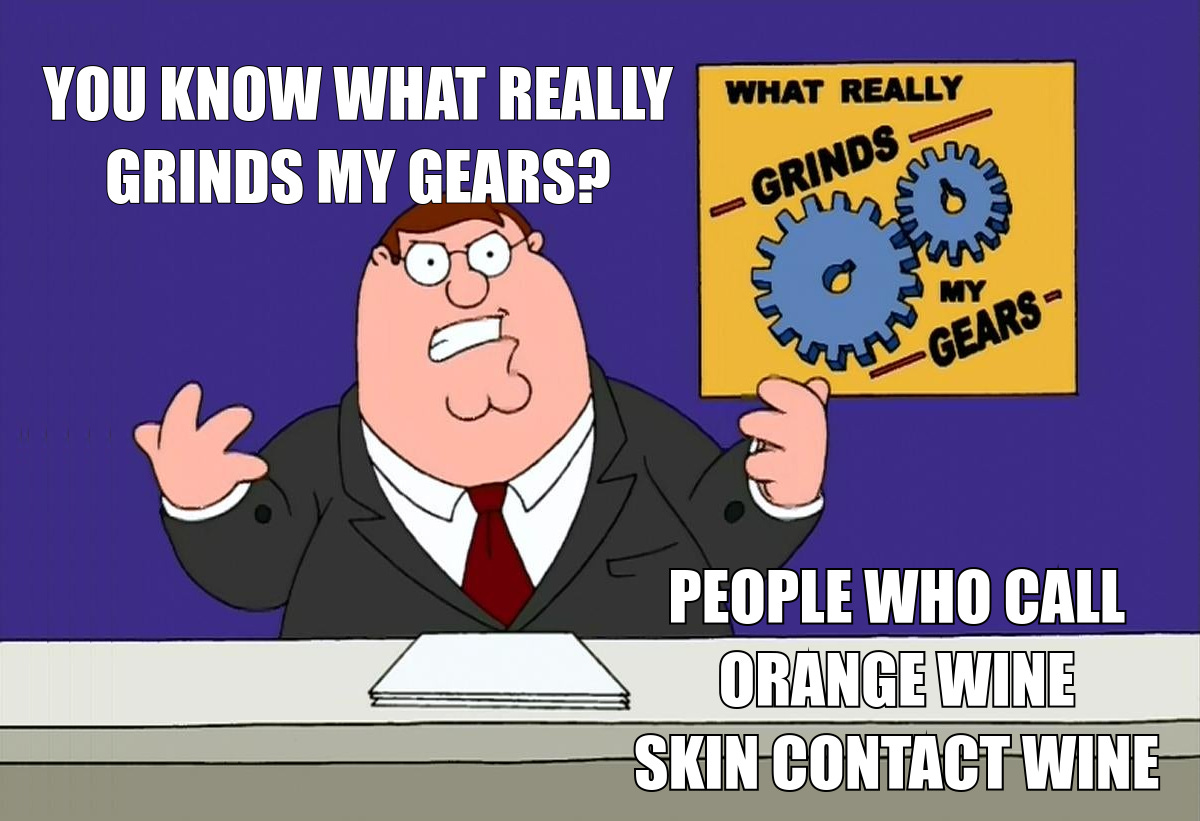
I’ll never forget the 2005 episode of Family Guy where Peter gets his own talk show, What Really Grinds My Gears. It’s launched a million memes, I just made that a million and one.
So you’re already tutting “hasn’t Simon got anything more important to worry about?” Well, short of the world ending, the death of print journalism, and the impossibility of ever tasting Domaine des Miroirs, no. I haven’t.
So what is it about skin contact?
Wine overflows with myth, mystique and confusion. We all love this, to a certain extent. But I’m a fan of inclusion too. I’d love more drinkers to discover the lesser known or under-celebrated nooks and crannies.
Orange wine is (or was?) one of those. The category has unleashed an explosion of flavours, aromas and textures that didn’t exist in a bottle, until a few decades ago. I’m grateful that someone figured out a simple, concise term to describe and distinguish these wines from regular whites. I love the Italian vino bianco macerato, but the phrase probably doesn’t fly as well in Hackney or Brooklyn as it does in Friuli.
The term orange wine was allegedly coined in 2004, and it’s long since become the most popular vernacular. So why do some establishments and wine professionals persist in using a wilfully technical and cumbersome alternative?
Is there a bit of ‘not invented here’ syndrome? Perhaps the name ‘orange wine’ just isn’t cool enough for some? I wish I knew. From a million justifications, I haven’t heard one that holds water (or wine).
Here’s why ‘skin contact’ is a fatuous way to describe orange wine
It doesn’t distinguish between red or white. Red wine is produced with exactly the same ‘skin contact’ technique. Which one do you mean?
Short skin contact (from a few hours to a day) is often deployed for white and rosé wines. Are they included in your category too?
It’s a technical phrase, unlike the terms white, rosé and red. We don’t call white wines “no skin contact whites”, nor do we call reds “red skin contact wines”. Why should the average wine drinker be compelled to engage with the method of production for this category only?
It doesn’t sit in the same paradigm as the terms white, rosé and red. Why not be consistent? If you have a personal vendetta against the colour orange, call it amber. The Georgians will love you.
It’s neither precise nor accurate. For the pedants, orange wine is skin fermented white wine. Skin contact often describes a pre-fermentation cold soak (aka the French macération pelliculaire). This technique does not impart the same aromas, flavours and tannins as skin fermenting.
The counter-arguments and ripostes
“Orange wine is a stupid name because not all orange wines are orange.”
Show me a white wine that’s paper-white please. Or a red wine that’s actually red, and not purple, navy or pink? This was never about colour.
“People will think they’re made from oranges.”
People will think what they’re going to think, you cannot outsmart stupidity. Hands up if you think rosé wine is made from roses?
“People get scared when they see the term orange wine, they think the wine will be disgusting or unapproachable.”
Calling it by a more obscure and technical term is not going to change whether someone likes the wine or not. In most cases, people purchase orange wines because they already know and love the category.
“Orange wine and skin contact wine are not the same thing.”
So why don’t you have two different sections then? Are red wine and red skin contact wine not the same thing either?
Bad choice road
I understand it’s not always easy for restaurants or retailers to figure out the best way of categorising - especially in the 21st century, where we have gender-bending styles such as red-white blends, orange wines made with gris varieties and reds made with almost no skin contact (cf. glou-glou).
I sympathise. But the following solutions for incorporating orange wines into a list are also sub-optimal:
Not separating them out at all
This is bound to result in customer confusion if not disappointment. Someone orders what they expect to be a white wine, and when it’s served it turns out to be amber coloured and tannic. If that’s not what they were expecting…
‘Not invented here’ methods of sign-posting orange wines, but still without separating them out.
Why not just put them in their own category? It’s so much easier.
Bunching them together with rosé, under a heading such as “skin contact/rosé”
So you’ve put wines made from red and white grapes, with and without skin contact/fermentation, under one heading. Well that’s not confusing at all….
Wall of shame
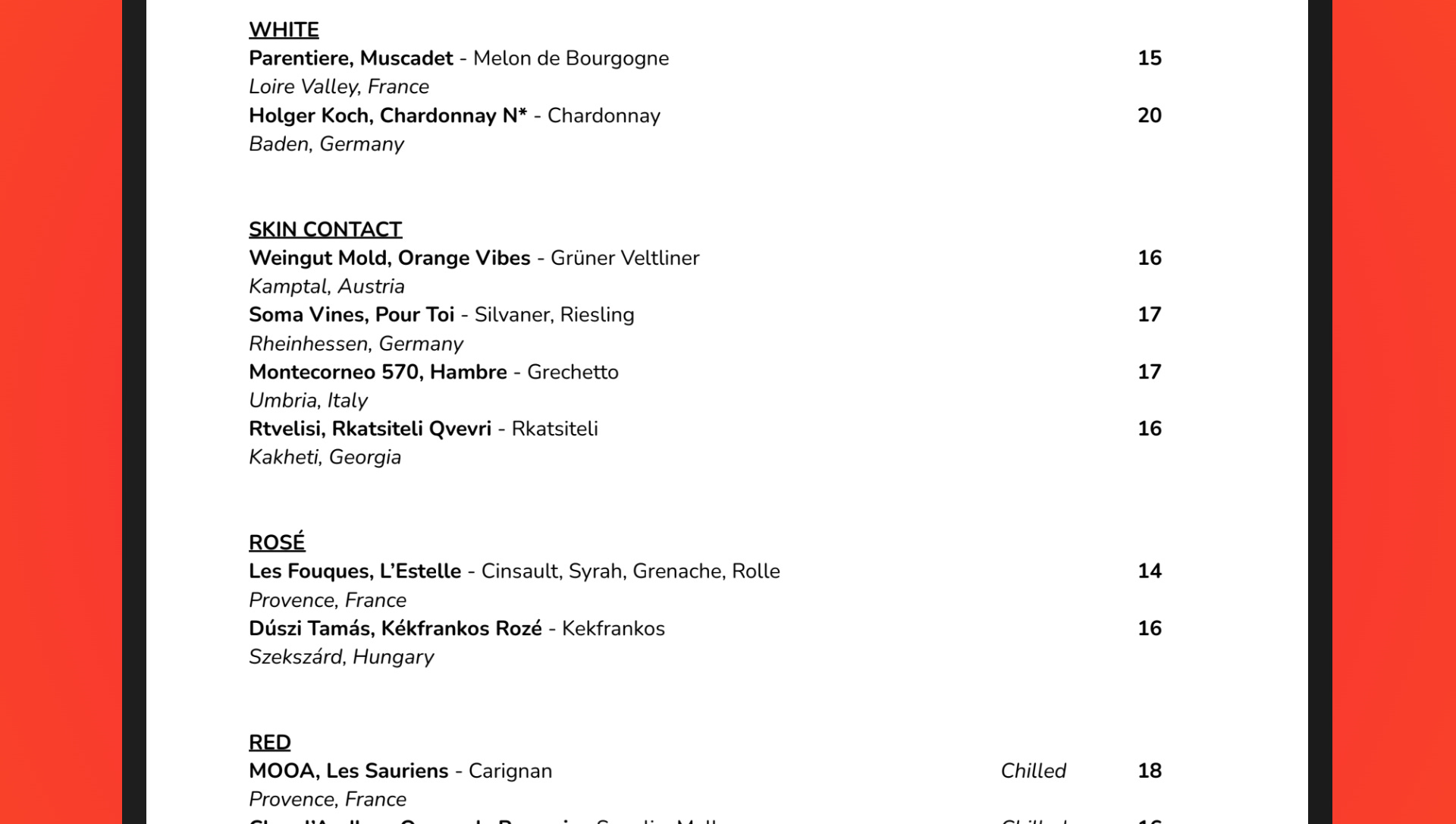
Skin Contact NYC - I’m sure it’s a lovely place, but. Here’s an excerpt from their by-the-glass list.
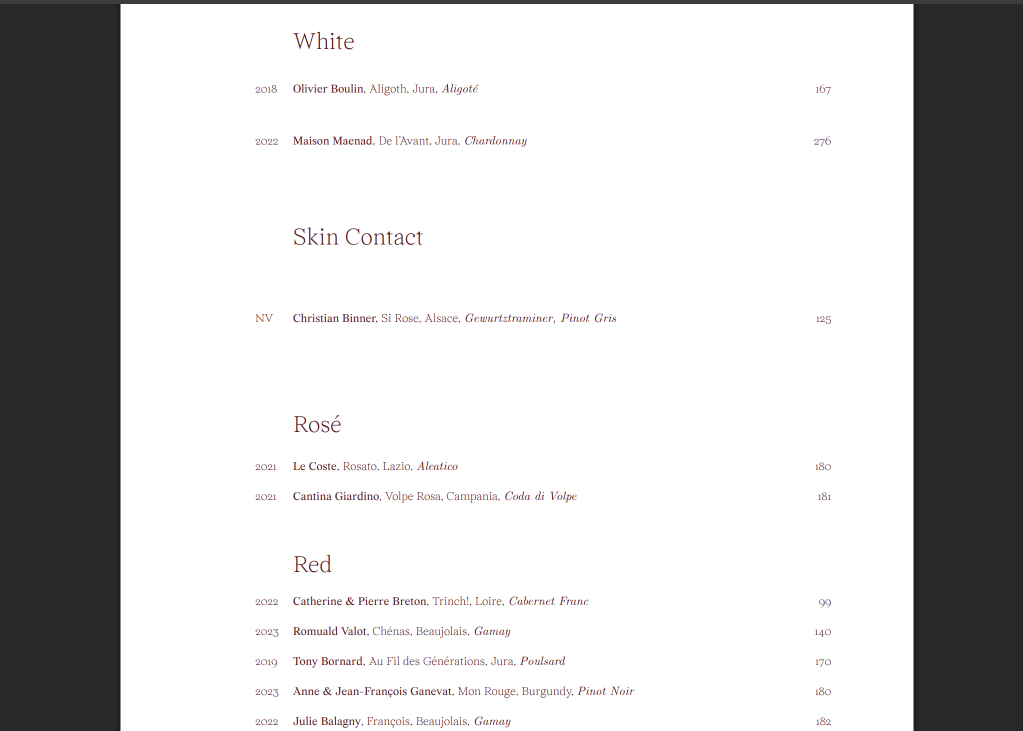
Brawn (Columbia Road, London) is one of my all-time favourite restaurants in the capital. But there’s room for improvement here:
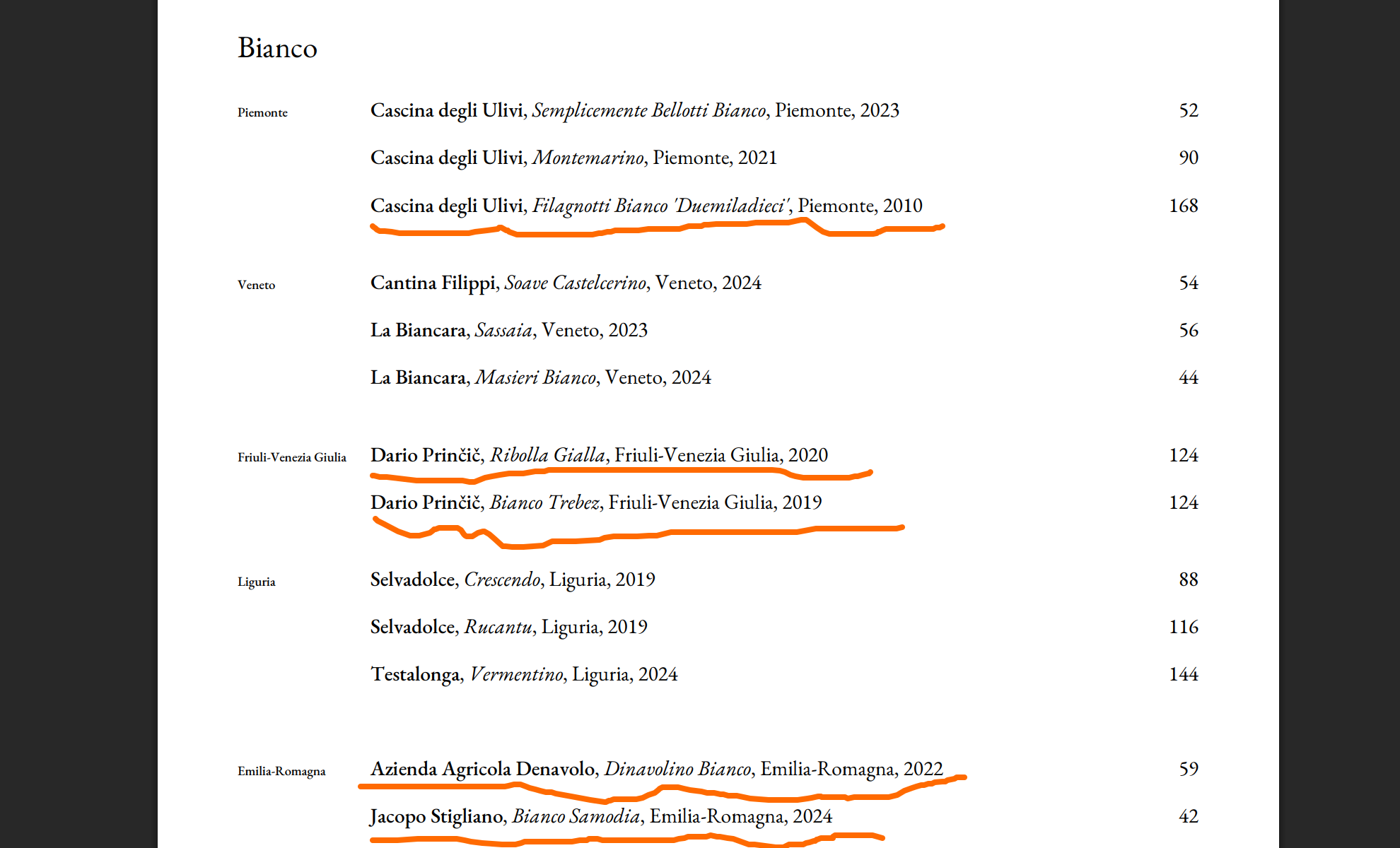
Osteria Vibrato (Soho, London), who I wrote about last week, mix a number of fine oranges amidst their whites, leaving either the unwary customer or the waiting staff to disentangle the two. They don’t wield the dreaded SC term, but this is hardly a better solution.
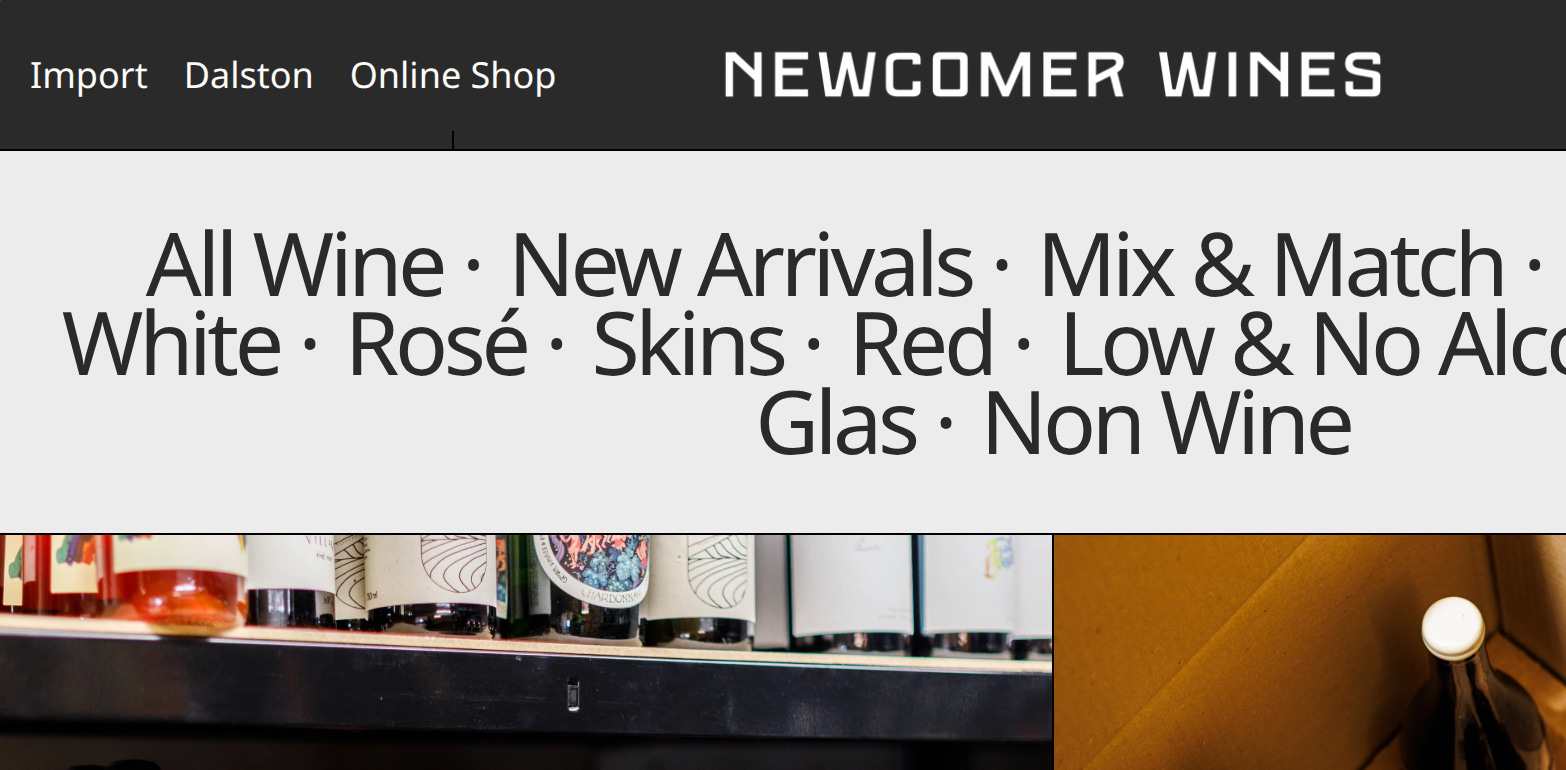
Newcomer Wines, I love you for bringing so many of Austria’s top artisan winemakers to the UK. But I wish your categories were more equitable. Why should white, red and rosé be known by a simple colour, while orange is cryptically recast as “skins”?
Choux Restaurant in Amsterdam is another favourite. Despite their newly minted Michelin star, prices remain fair. But that a venue like this, which specialises in natural, does not give its countless oranges star billing just feels off. This is an excerpt from their ‘white wine’ section:
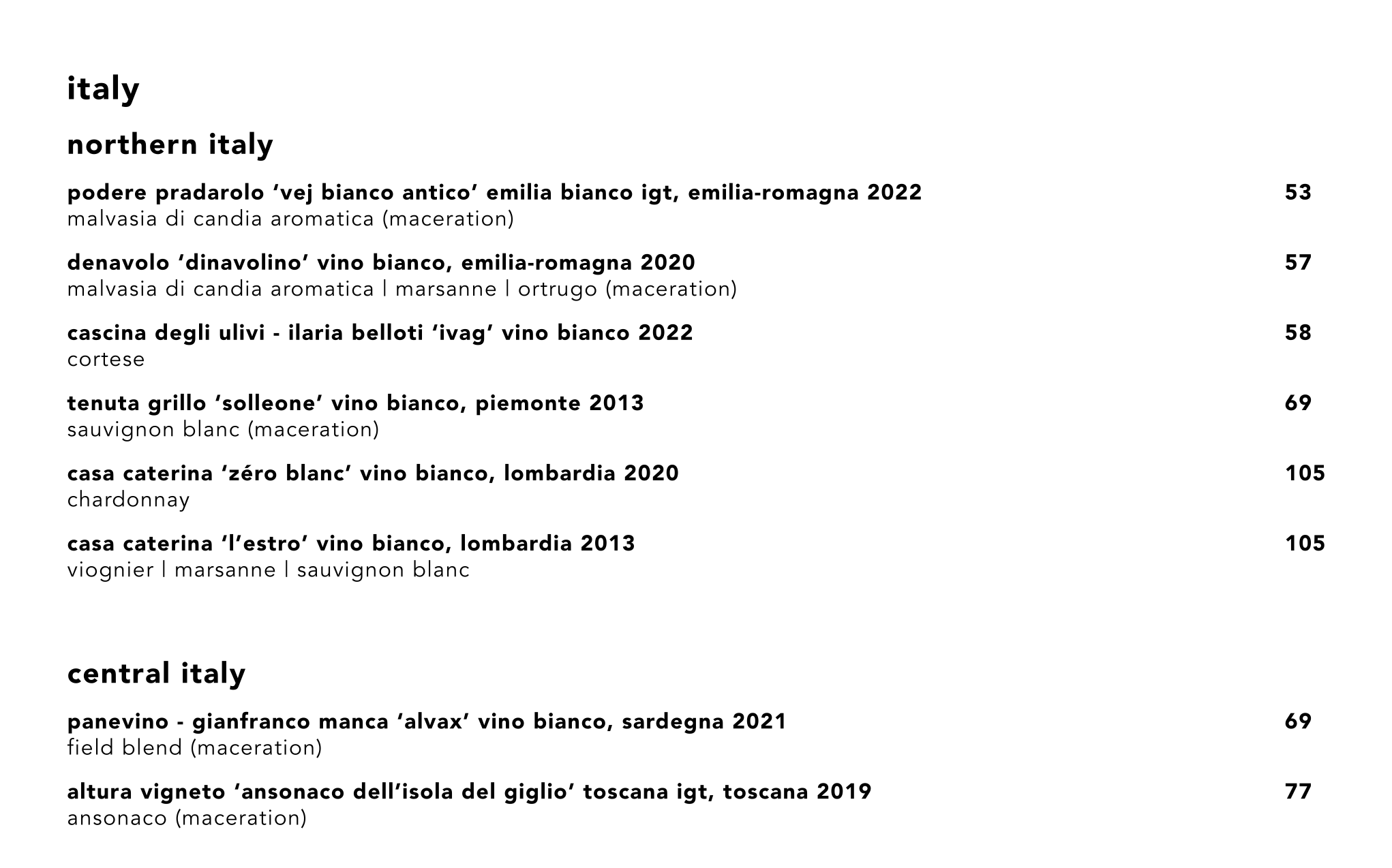
I’m absolutely not hating on these businesses. It’s just that their choice of nomenclature frustrates me.
I’ll get my coat. I’m off to go grind some gears.
This article is free to read, share it with your friends if you’re nothing better to do:
This button is provided so you can tell me I’m an idiot:
This button is where you reward me for unrivalled entertainment, valued opinion, peerless writing standards, that sort of thing:
Further reading:
We Don't Need No (Orange Wine) Education

More ranting about orange wine, this time it's about the wine industry's stale narrative that never gets updated. Whenever orange wine is in the press, it's always cast as the bright new thing, this year's craze, the category that will finally topple rose.
I beg to differ.


The "skin contact" crowd reminds me of people who insist on calling sparkling wine "méthode traditionnelle" at dinner parties. Technically correct. Socially exhausting. "Orange wine" tells you what you're getting. "Skin contact white" sounds like a dermatology seminar. Language should help people find what they want, not gatekeep them from trying it.
Totally agree with you Simon! Since I love orange /amber wines, I always search for those on the winelist and it's not helpfull at all if they don't have their own section- unless you know the wines already and you have to scroll the white wine part. If not you have to ask the staff if there is any 'white' wine with longer skin contact -if they know about the length of maceration...