

Misunderstanding Wine
You've got it all wrong!
What’s the purpose of wine? I’d say it’s to provide deliciousness, refreshment and pleasure. Part of which is the alcohol’s enhancement of your relaxation and conviviality.
It’s easy to lose sight of this definition, if you spend too long hanging around the nooks and crannies of the industry.
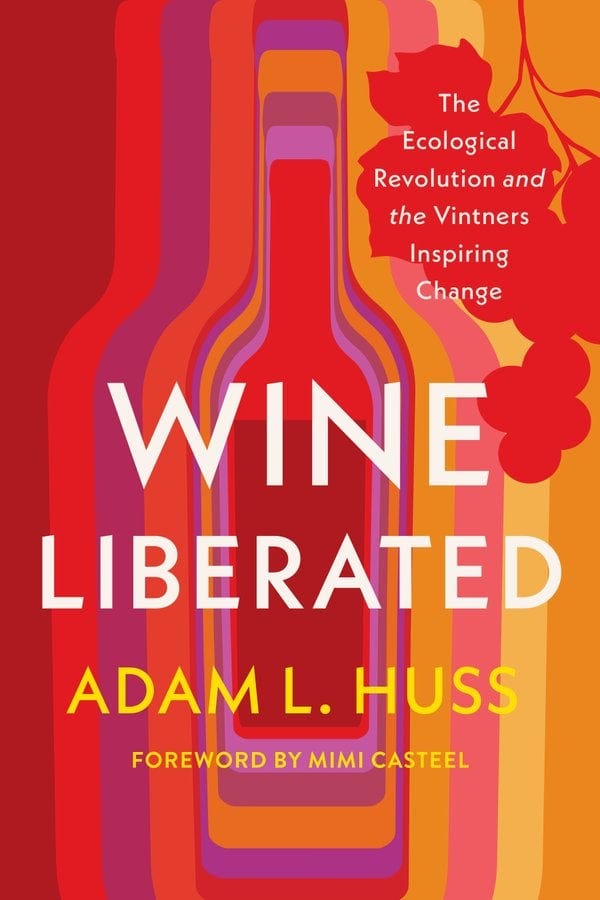
Two pieces I read this week caused me to stop and think about it. One was a pre-publication copy of Adam L. Huss’s book Wine Liberated. The other was an article by Sara Danese titled Marketing Natural Wine.
Adam posts at Beyond Organic Wine, and is one of the most radical voices in wine today. His book challenges just about everything you thought you knew.
I’ll publish a full review closer to the November publication date, but here’s the premise: The global wine industry is a product of colonialism, protectionism and prejudice. It has boxed wine into an ever narrower definition - something that must be made only from vitis vinifera grapes and that must conform to certain stylistic profiles. It’s brought viticulture to where it is today: a monoculture massively reliant on pesticides to keep the sickly vitis vinifera species alive.
Adam outlines a different future, celebrating the pioneers working with modern hybrid varieties, or those who completely eschew grapes in favour of fruits better adapted to their regions. Sustainability is the overriding goal.
Impossible
Something that really rang true for me was Adam’s assertion that Europe’s appellation systems are stuck in a self-serving loop. The whole ecosystem of wine education, sommelier qualifications and blind tasting competitions relies on predictability, and the fanatical gatekeeping of our PDOs and PGIs helps maintain it.
It brought me back to a panel discussion I moderated in 2024 in Lech, titled Are terroir and natural wine diverging? Polish MW Wojciech Bońkowski was first to stick his hand up. He said “I’m pretty sure that if you poured [blind] a selection of Rieslings from different regions in Germany, a group of MWs or Master Sommeliers would manage to identify most of them”, before adding the kicker - “ but if they were natural wines, it would be impossible.”
I was floored by his comment. Bońkowski implied that wine has a duty to be identifiable and predictable - otherwise it’s not showing sense of place AKA terroir. This is nonsensical to me. Nature and vintage variation are key planks of the whole terroir thing. And what is nature if not unpredictable? Surely an artisanal wine has the right to shock and surprise?
Don’t market me
Sara Danese’s article troubled me for similar reasons. Her blog In the Mood for Wine comes recommended for its insightful comment. But I feel she missed the mark here.
She suggests that the industry could learn from how natural wine has ‘marketed’ itself - and notes that it is the only sector in wine that is currently growing rather than contracting. But natural wine began as a grass-roots, counter-culture movement. Much of its appeal stems from the fact that it didn’t market itself in any structured or conventional sense. It just dared to exist.
“You’d be wrong to think this is a piece to disparage natural wine” she insists. But you can feel the clothes-peg on her nose. She talks about “the kombucha-like flavours so often associated with natural wines” and it hardly sounds positive. “I also wonder whether their more pungent, distinctive aromas— rather like unpasteurised cheese — give less wine-experienced drinkers the confidence that they’re actually tasting something, that they’re participating in the ritual of wine tasting” she continues.
In case that wasn’t patronising enough, she adds “Faced with a more subtle wine, perhaps they wouldn’t feel quite so sure?” So natural wines, it seems, can’t be subtle. And unpasteurised cheese is bizarrely damned in the same breath.
Sara does a good job of outlining the positives from the natural wine scene. She mentions “personality over corporate polish”, and talks about natural wine bars that are “more welcoming and more relaxed”. But her observations only concern the window dressing, without making the link with what’s in the bottle.
I don’t think you can graft ‘natural wine marketing’ onto a mainstream industry that doesn’t share the same ethics or priorities. The natural wine community has always celebrated the idea of wine as something unpretentious, to be freely and joyfully imbibed, not to be fussed over or consumed in prim little sips.
In that sense, it gets back to wine’s core purpose. If you just want to enjoy it, the industry’s classification systems and hangups are irrelevant. And who cares if it tastes like kombucha, so long as it’s delicious?
This brings me back to one my favorite definitions of "brand:" it's the image of your product in the customer's mind. It's not, in other words, what you say it is. It's what the customer believes it to be. Natural wine has an acquired image, rather than a manufactured one. I'm sure many producers are thrilled with where it has landed, and probably some aren't, but regardless, there's only so much any given producer can do to move the market's perception of the category.
I agree with the thesis that the PDO system has ossified wine. In the States we see more experimentation—with hybrids, coferments, etc.—because it's not forbidden and there's also no tasting panel at the tollgate telling you to shove off. Not that our appellation system is perfect, far from it! But it feels less hidebound by tradition and expectation, except in certain tiny pockets (er-hem, NAPA cough, cough...)
Couldn’t agree more. Just had a meal at Datil in Paris with all natural wines. In the hands of a talented sommelier working with inventive chefs, natural wines can be a revelation – enhancing the tastes and opening one up to new sensory experiences with wine. Hidebound wine expectations should be the past and openness to a wider wine experience should be the norm.