

Zero Zero Bordeaux
Essential additions to my 2025 Wine Guide, as the region tries to redefine claret
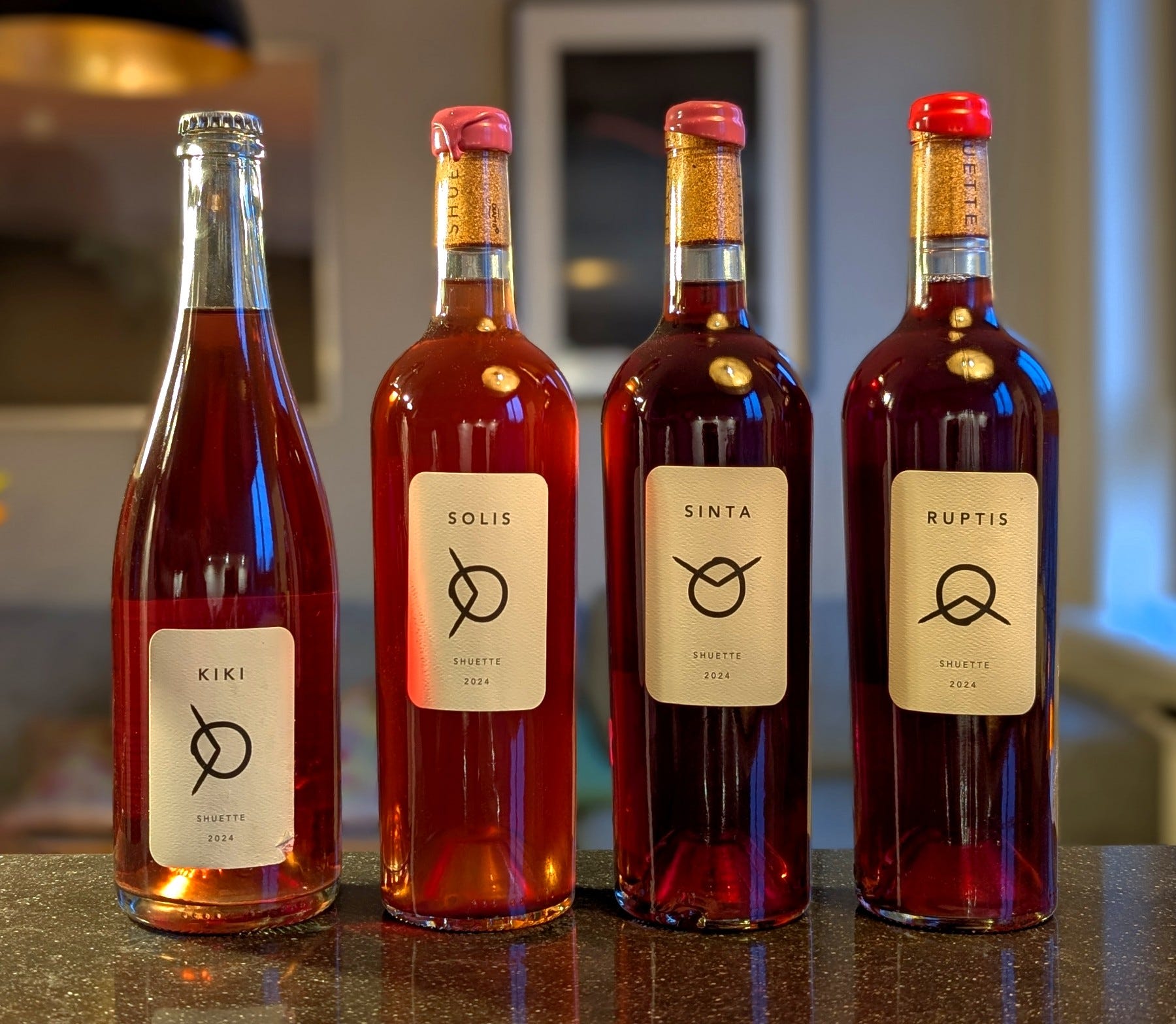
In this post: Reviews of six wines from Château Shuette and two from Ormiale - two estates in Bordeaux making natural wines with a zero-zero approach to vinification.
It’s official. Bordeaux’s Conseil Interprofessionnel du Vin de Bordeaux (CIVB) - the organisation that represents and regulates the region’s growers - has introduced a new legally defined style named Bordeaux Claret.
If you’re a Brit like me, the C-word hardly needed clarification. For centuries, we referred to Bordeaux’s classical red wines simply as claret1. Sadly, it’s become a dusty concept, conjuring up images of privilege, stiff upper lips and pin-striped suits. I say sadly because I remain a Bordeaux-lover, despite the associations.
The CIVB wants to re-imagine ‘claret’ as a light-bodied, easy drinking red to be served lightly chilled. The full description in the cahiers de charge is as follows:
Clarets are red wines with a light tannic structure and a ruby to pale purple color. They are luscious (gourmand) and offer aromas of ripe red fruit. These wines are best enjoyed chilled and in their youth.
Uncharitable readers might smell a whiff of desperation. Bordeaux has hit hard times, famed for a heavier more structured style that is no longer à la mode. The region is awash with oceans of bulk wine that isn’t shifting even at one Euro per litre. The head of the local farmer's organisation insists that Bordeaux’s vineyard surface must be halved to resolve the problem. This just published piece from the Wine Spectator is even more depressing.
I’m not sure if AOC Bordeaux Claret is a clear-headed solution. It’s confusing partly because Brits like myself understood something very different from the term, and more so due to the pre-existing clairet category - a classification officially defined as a dark rosé but in practice falling somewhere between rosé and red.
The CIVB’s marketing includes entertaining advice for French speakers on how to pronounce and differentiate ‘claret’ from ‘clairet’, with clarette offered as a phonetic guide to how ze eenglish massacre the former. If native speakers struggle, God knows how the rest of us will manage.
The new ‘official’ claret is also ironic, because some of the region’s organic and biodynamic growers already produce wines with precisely these lighter, fresher stylistic qualities, which are inevitably declassified and thrown out of the appellation.
Low Intervention Red Bordeaux, Part 1

Check out the full guide published in March 2025. You'll find reviews of Shuette's 2023 and 2020 vintages here.
TMC’s Low Intervention Red Bordeaux wine guide, published last year, profiled some of those innovators. But there were two omissions that I’m delighted to add today:
